1.0 PROBLEM
Property viewings show buyers an empty shell — it is hard to imagine how furniture would fit a space, and existing real-estate apps stop at photos and floor plans. Aftino targets the physical home tour itself: while the buyer is standing in the property, the app places virtual furniture in the room through the phone camera, turning an empty viewing into a furnished one.
2.0 FEATURES / ARCHITECTURE
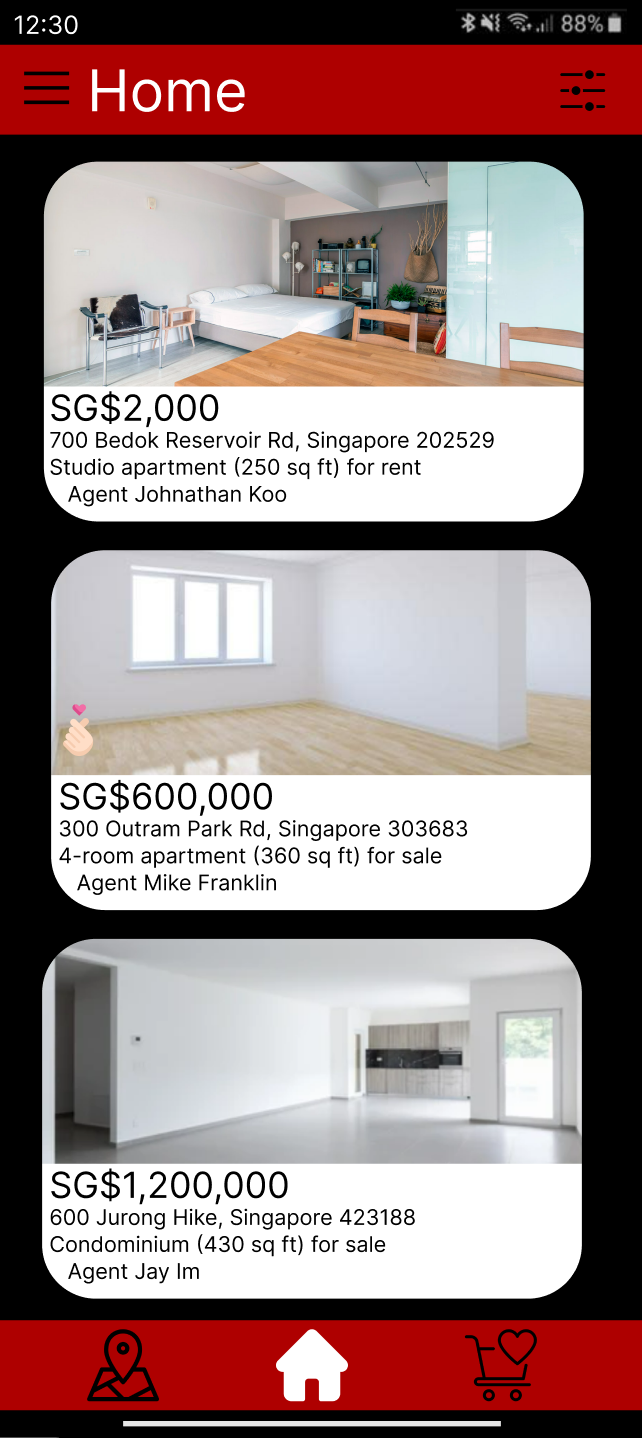
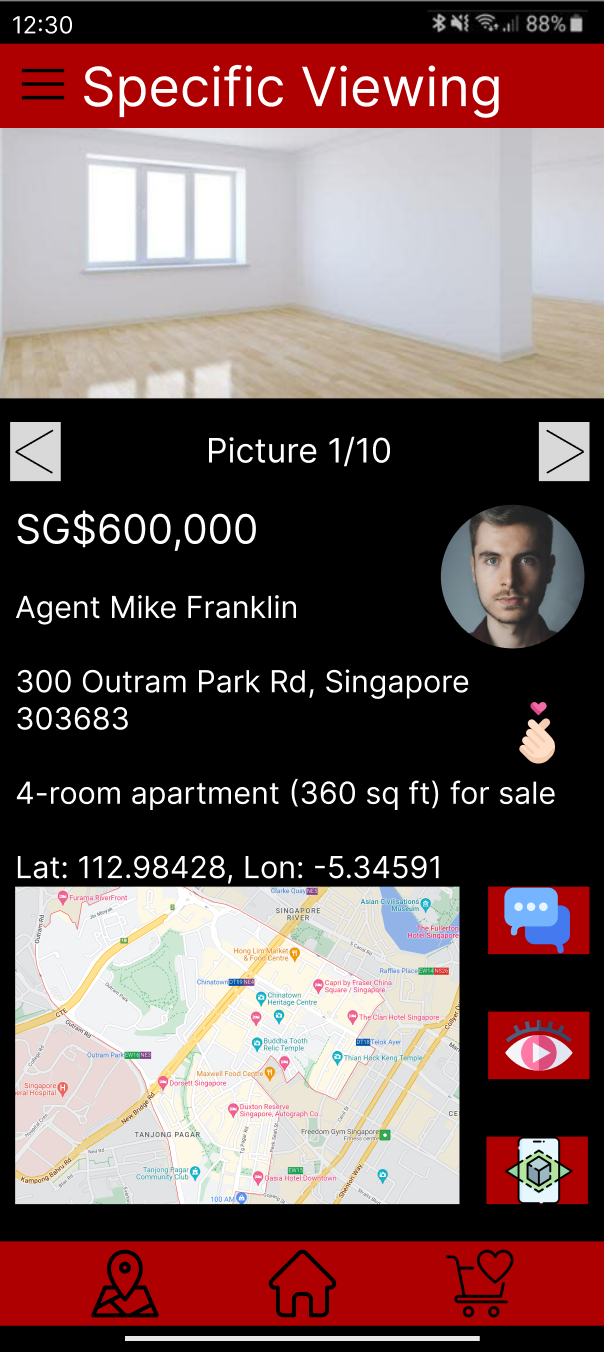
The app is a full real-estate marketplace built solo in Java, from Figma UI/UX design through implementation. Estate agents upload listings — address, price, type, square footage, rent-or-sale, photos — which are stored locally in SQLite with latitude/longitude coordinates. Each listing page embeds Google Maps for location context alongside the agent’s contact.
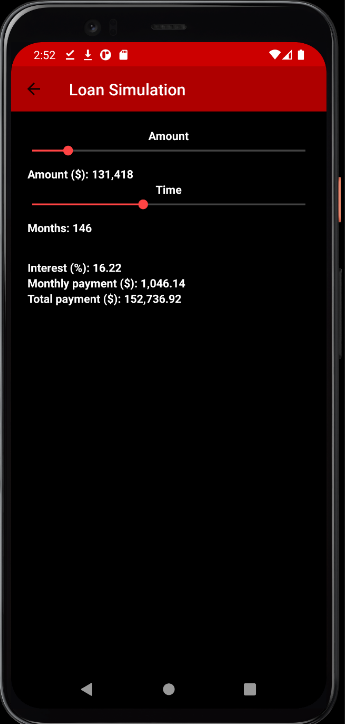
The AR home-tour feature uses Google ARCore: during an in-person viewing, buyers place virtual furniture into the real room through the camera. A loan simulator computes the financing picture for a listing — amount and tenure sliders produce the interest rate, monthly payment, and total payment.
3.0 NOTES
The entire app — UI, UX, and Java code — was built solo. The interface was designed screen-by-screen in Figma before any code was written (the full UI flow is linked below as External), which kept the implementation honest to the design. This “design first, code second” habit carried forward into later projects.