1.0 PROBLEM
Individuals struggle to track and manage wellness information — exercise, nutrition, sleep — across scattered tools, and generic health advice online is hard to act on. The application provides a centralized desktop platform where a user inputs their health attributes and receives personalized, science-based daily targets, then logs actual intake against them over time.
2.0 ARCHITECTURE
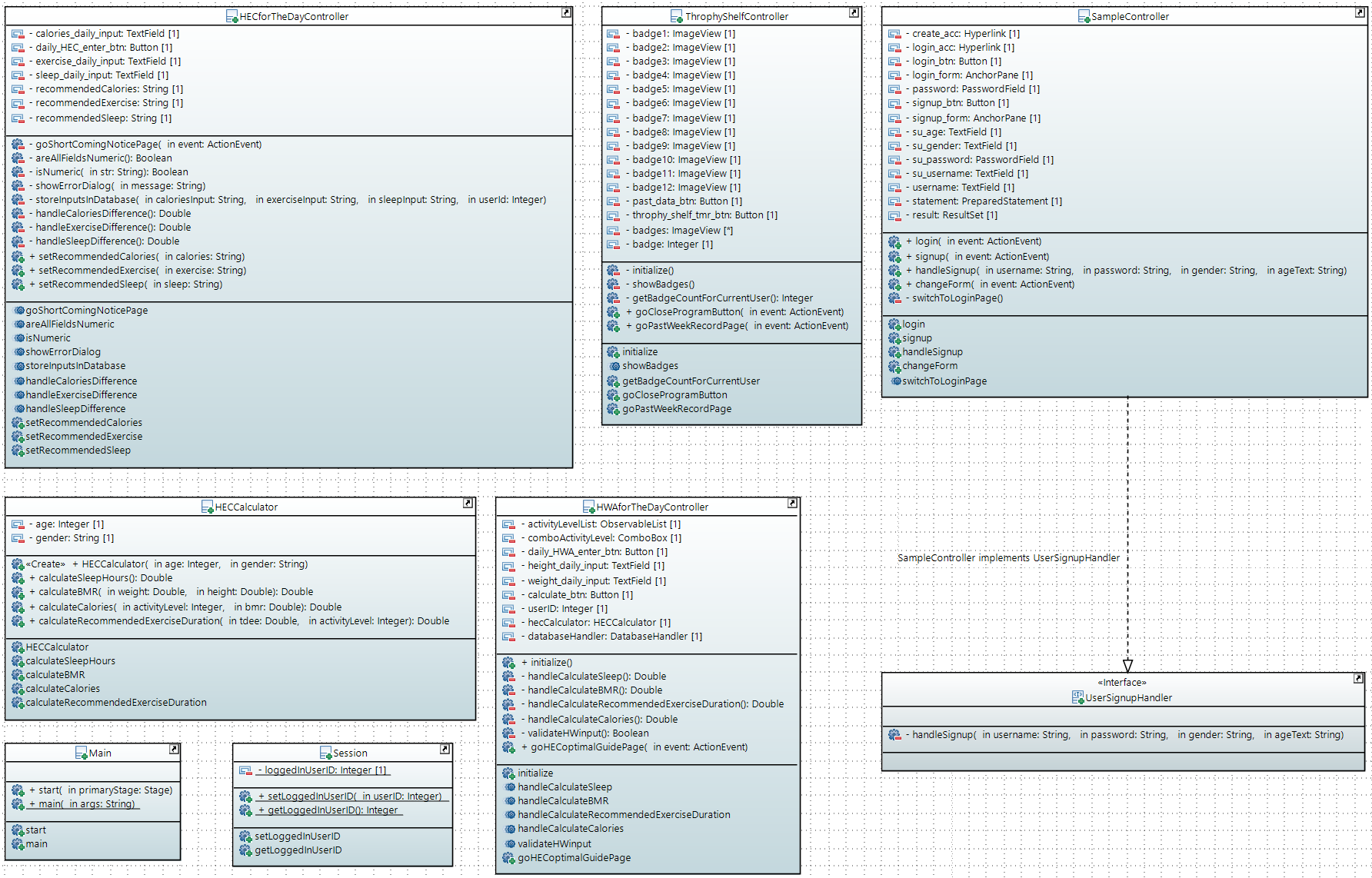
The app is a JavaFX desktop application structured on the MVC pattern with an explicit SOLID decomposition: DatabaseHandler owns all database operations, HECCalculator encapsulates the health mathematics, UserValidator centralizes signup input validation, and an abstract LabelController base class (extended by LabelGetter / LabelSetter) standardizes label management across the many FXML scenes.
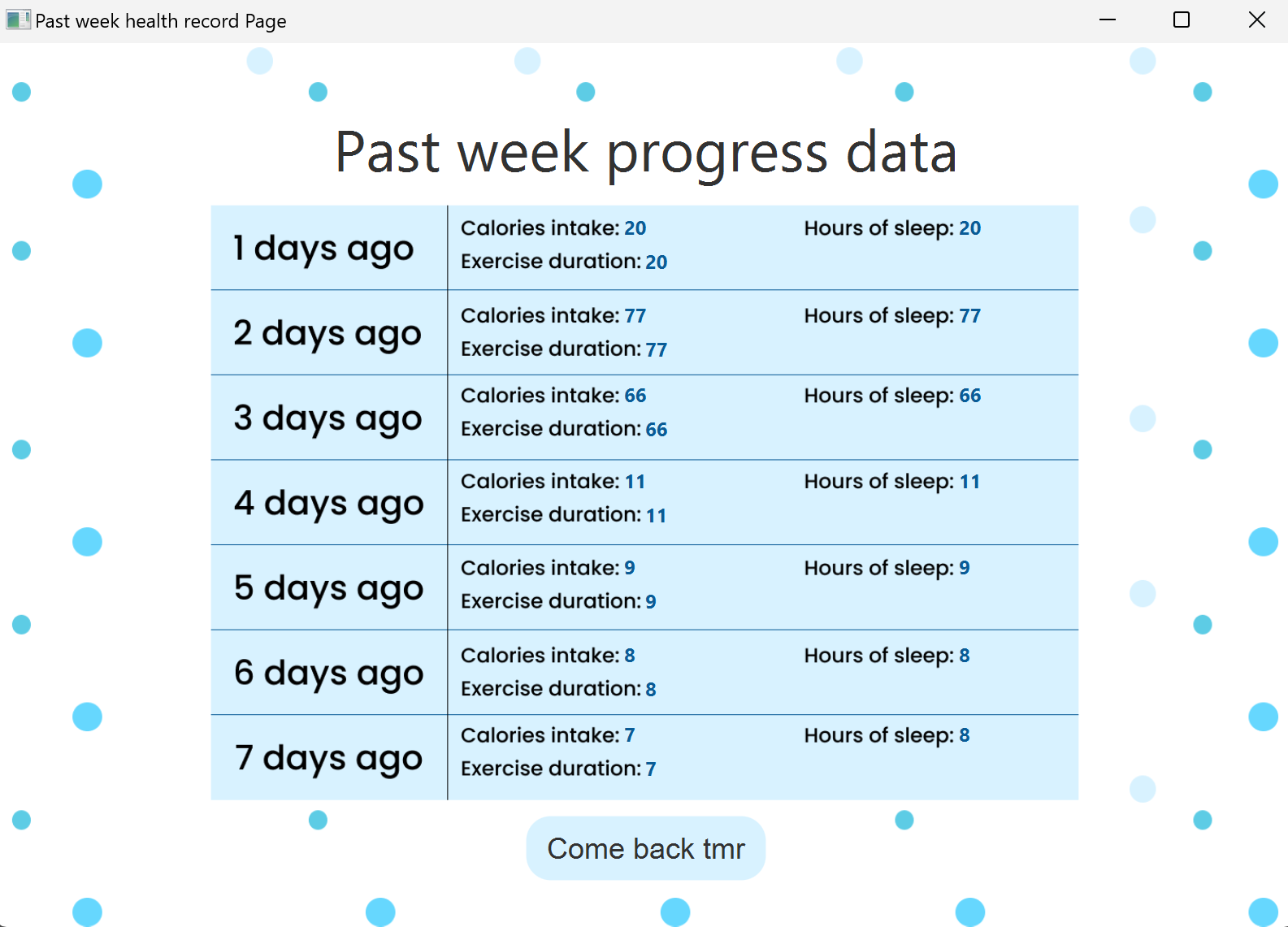
Daily targets are computed with the Harris-Benedict equation: BMR is derived from gender, age, weight, and height, then scaled by one of five activity-level multipliers (1.2–1.9) to produce recommended daily caloric intake, exercise duration, and sleep hours. The user then logs actual values on a daily tracker; a shortcoming notice shows the gap between actual and optimal, and a past-week view visualizes the last seven days of entries.
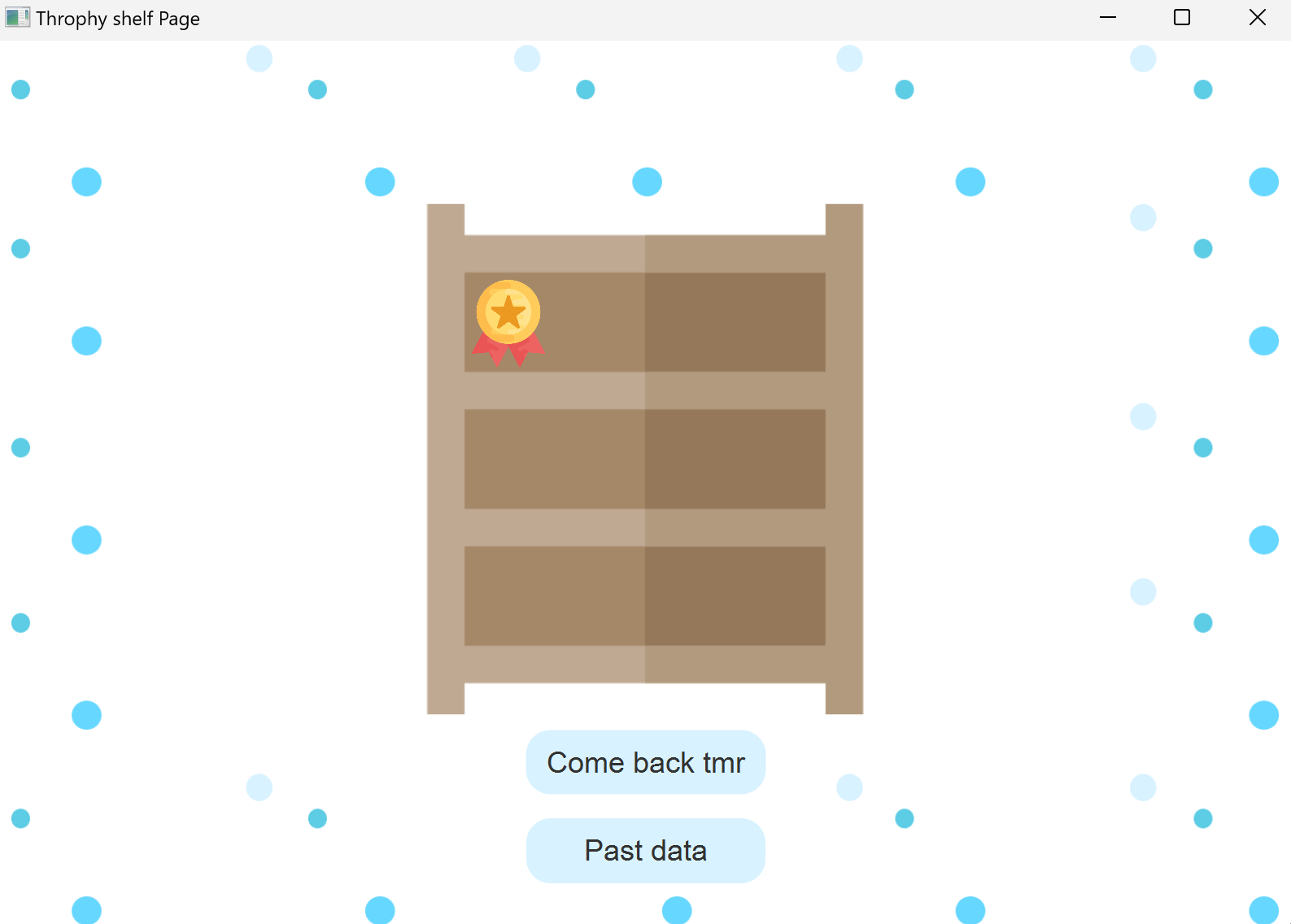
Engagement is gamified: a “What type of exerciser are you?” quiz assigns the user an avatar on first login, and meeting all three daily targets earns a badge on a trophy shelf.

3.0 HUAWEI CLOUD DEPLOYMENT
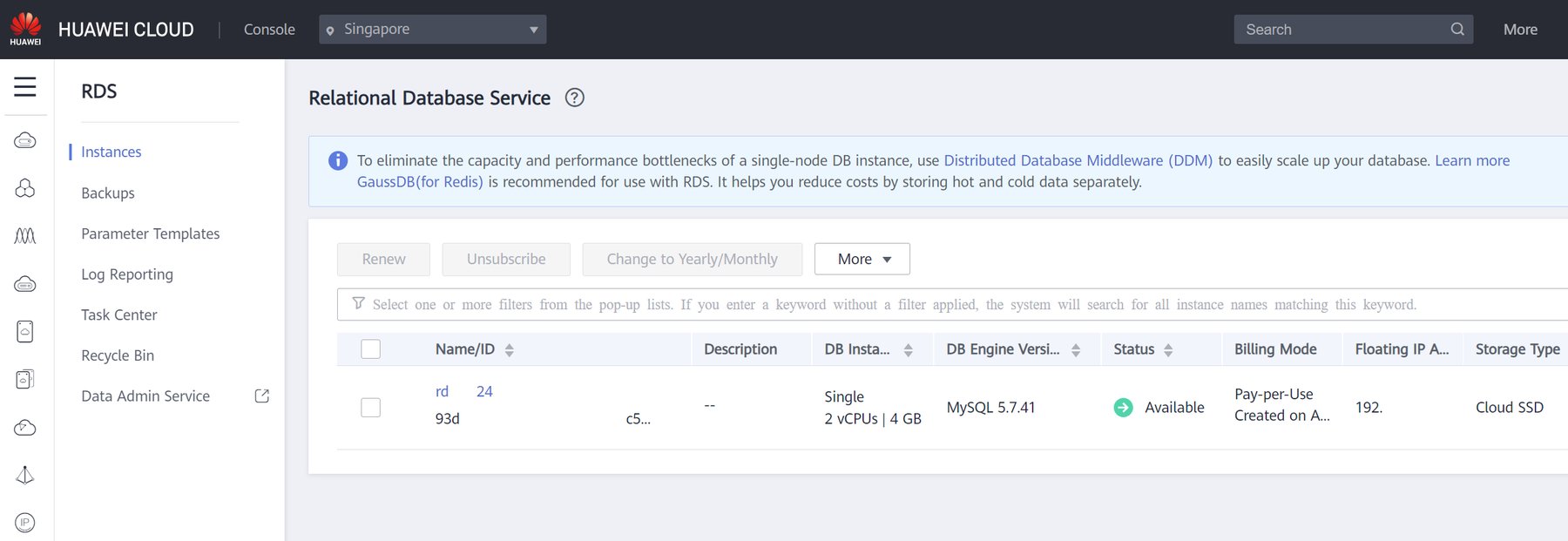
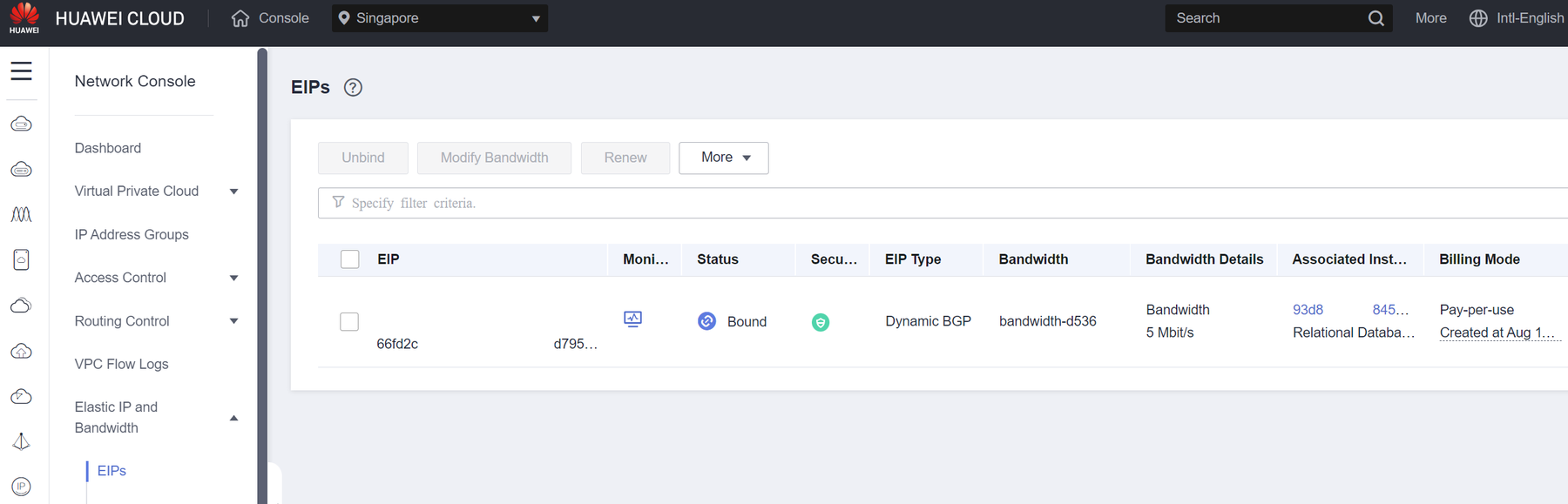
After the SP module concluded, the project was extended and entered into the Huawei Developer Competition APAC 2023 as team StanleySP, under the project name “Wellness Avatar”. The local MySQL database was migrated to Huawei Cloud Relational Database Service (RDS), with a Huawei Cloud Elastic IP bound to the database endpoint so the desktop client reads and writes user profiles, daily inputs, and badge counts against the cloud instance instead of a local server.
The competition phase also included a small verification round — market interviews across age groups and a beta test spanning fitness enthusiasts to wellness-tracking newcomers — whose feedback drove refinements to terminology, navigation, and instructions.
4.0 ERRATA & REVISIONS
The UI is built almost entirely from FXML Labels rather than components like TableView — a deliberate “design first, code second” trade-off to reproduce the Figma concept exactly, since TableView’s styling capability was too limited. The label-heavy approach is what motivated the LabelController abstraction; without it, scaling interactions across that many scenes would not have been maintainable.
If building this today, I would hash passwords instead of storing them directly in the user_details table, use prepared statements throughout the database layer, and replace the per-day label grid in the past-week view with a custom styled component. The calculation layer was the part I held to the highest standard at the time — the Harris-Benedict outputs were tested repeatedly, on the principle that a wrong “optimal” figure shown to a user is worse than a crash.